
How to wash with a pressure washer
Whether you are washing your car, patio, or house facade, the pressure washer is an invaluable tool. Achieving a perfect result is all about using the right technique and equipment. With these smart tips, this season's cleaning job will be easier, faster, and gentler.
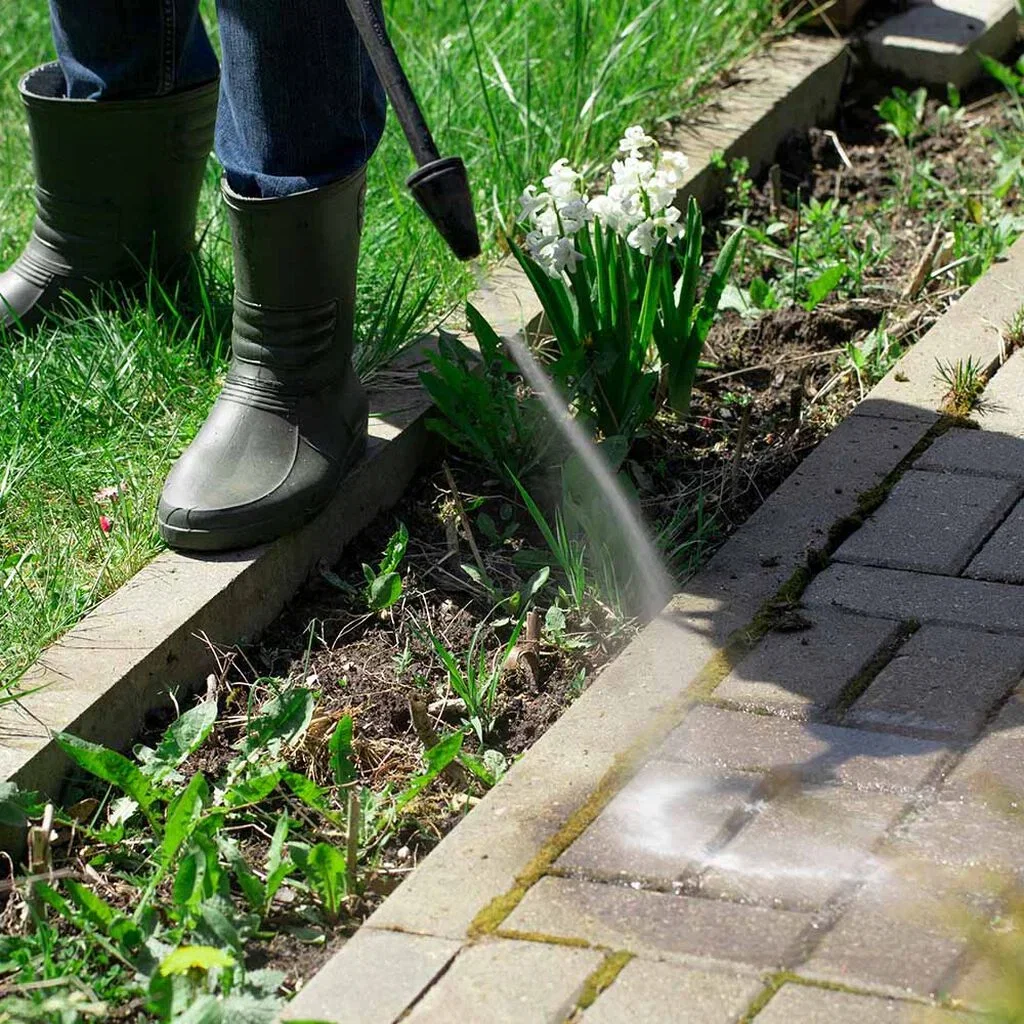
Planning is the key to a streak-free result
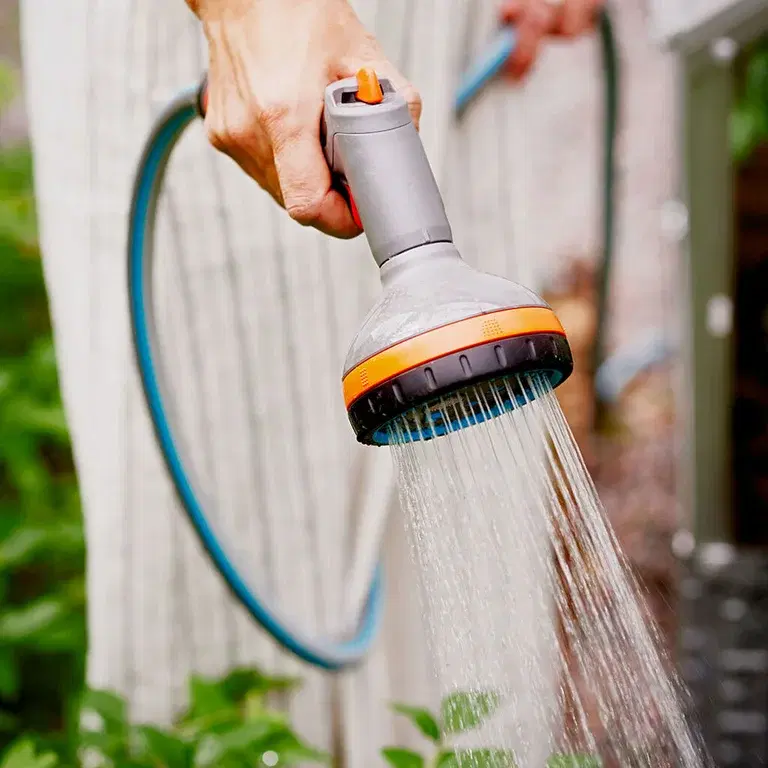
Even before you turn on the water, good preparation is crucial to avoid streaking and damage. The biggest mistake many people make is going straight in with full pressure. Instead, start by removing leaves, gravel, and other loose debris with a simple broom or garden hose. This prevents loose particles from scratching the surface during the actual wash.
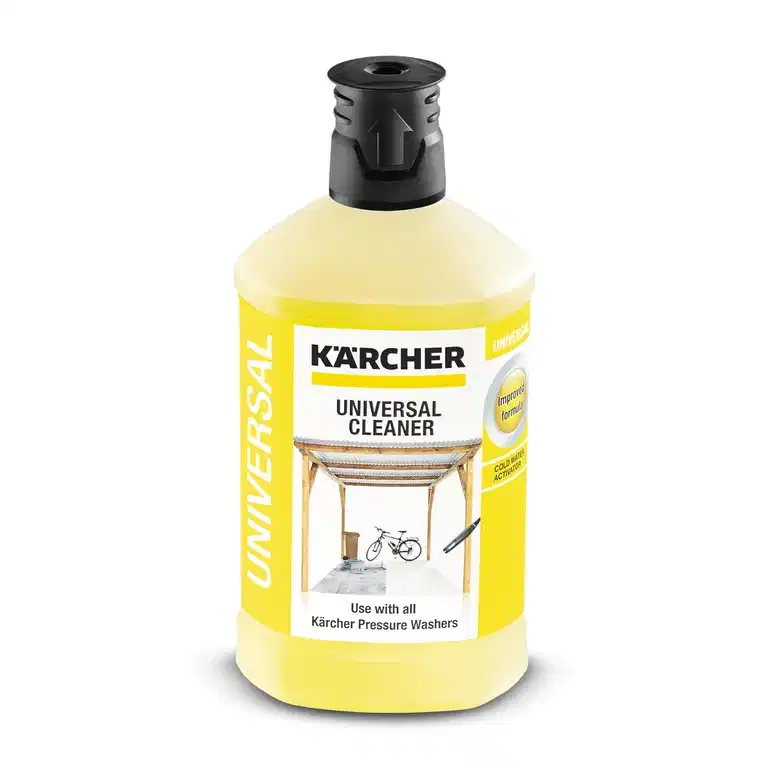
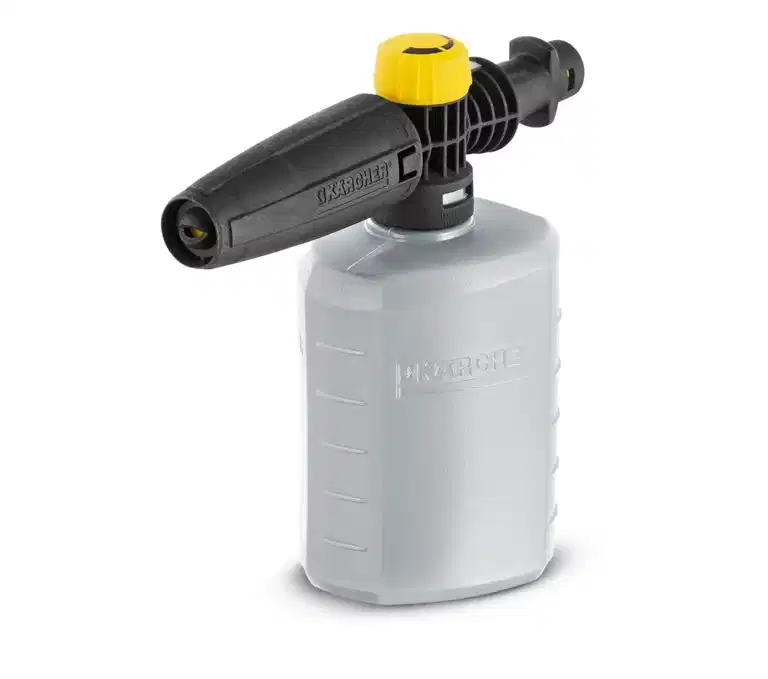
Next, it's critical to let the chemistry do the work. Apply a suitable cleaning agent—whether it's facade wash, car shampoo, or patio cleaner—using a foam cannon or low-pressure nozzle. Give the soap time to work and dissolve the dirt. This dwell time significantly reduces the need for high pressure, which is especially important for soft materials like wood.
Guide to pressure adjustment and nozzle selection
- The choice of nozzle and pressure is crucial for both safety and results. Pressure that is too high can permanently damage wood by splintering the fibers, or wash out the sand in the joints of paving stones. You should always start at the lowest pressure on a small, inconspicuous area to test the gentleness before continuing.
- For cleaning cars and garden furniture, you should always use a gentle fan nozzle and maintain a good distance, preferably 30 centimetres or more, to avoid damaging the paint or varnish.
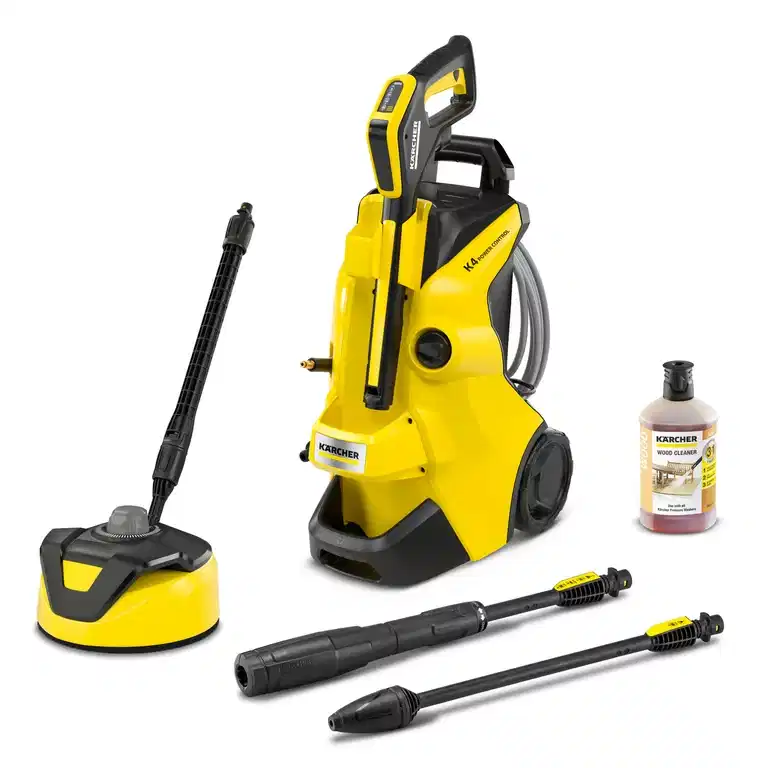
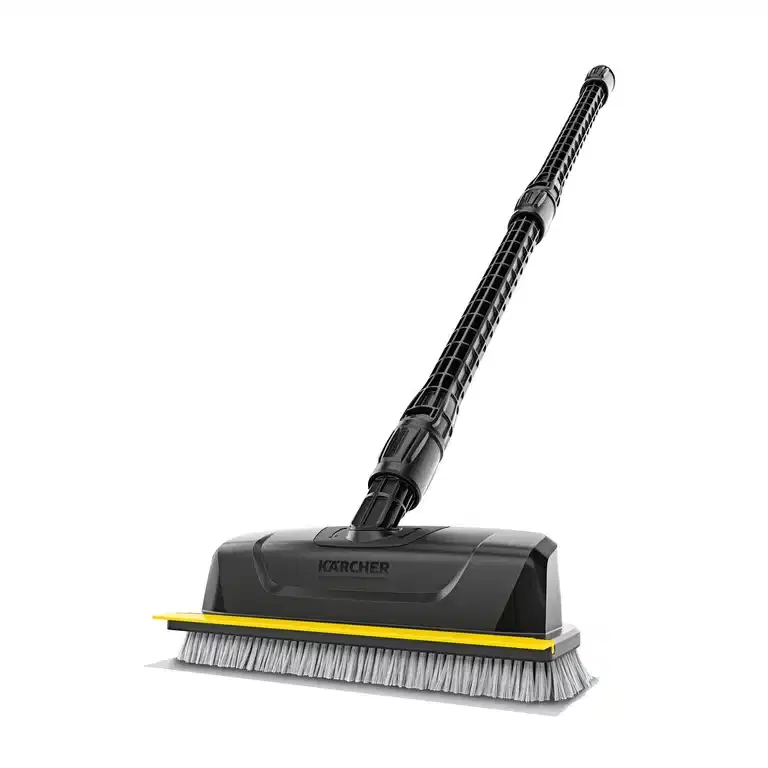
- When washing patios and wooden facades, a patio cleaner is the most effective and gentle choice, as it distributes the pressure evenly. Alternatively, a wide fan nozzle can be used, but you must keep the lance moving constantly.
- Harder surfaces like tiles and paving stones tolerate higher pressure, and here you can often benefit from a rotating turbo nozzle to remove ingrained moss and algae.
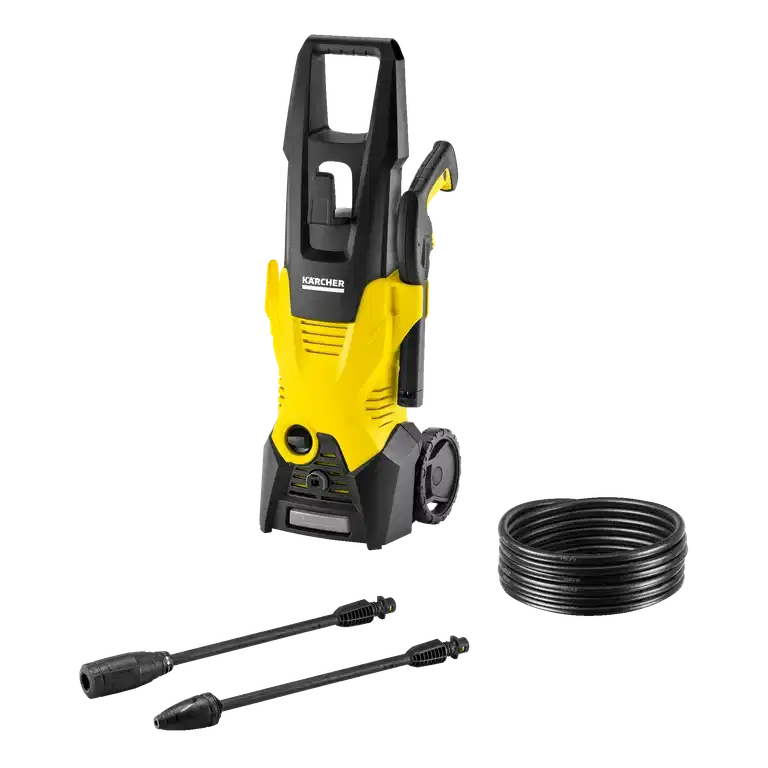
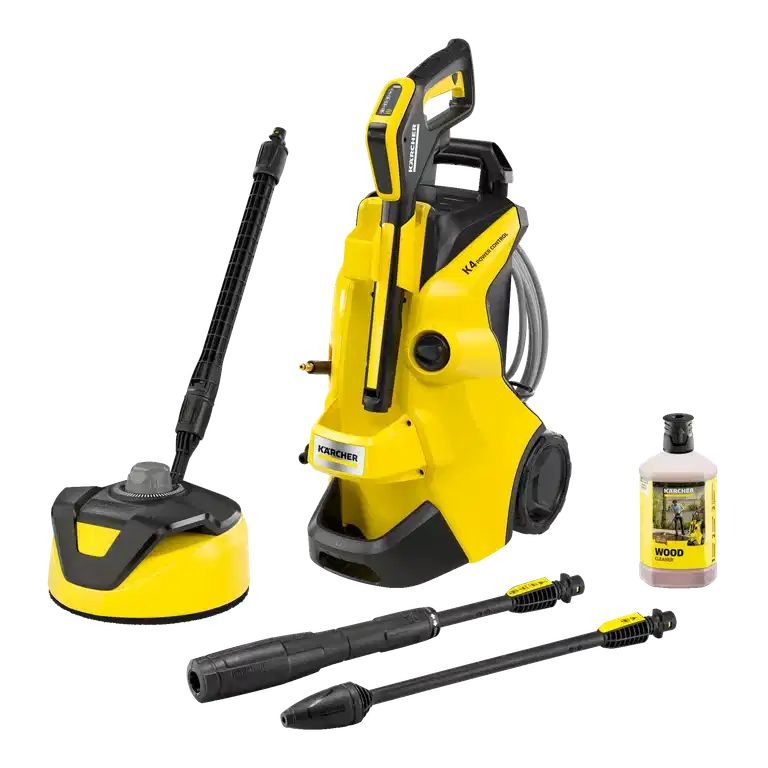

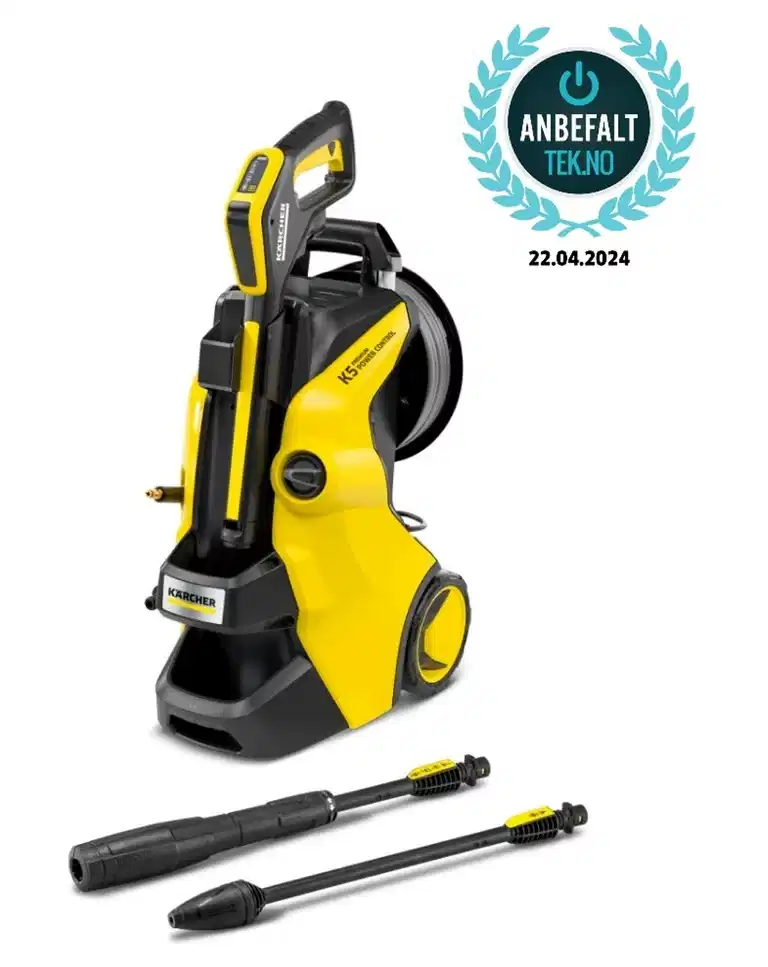
Work methodically and protect the surroundings
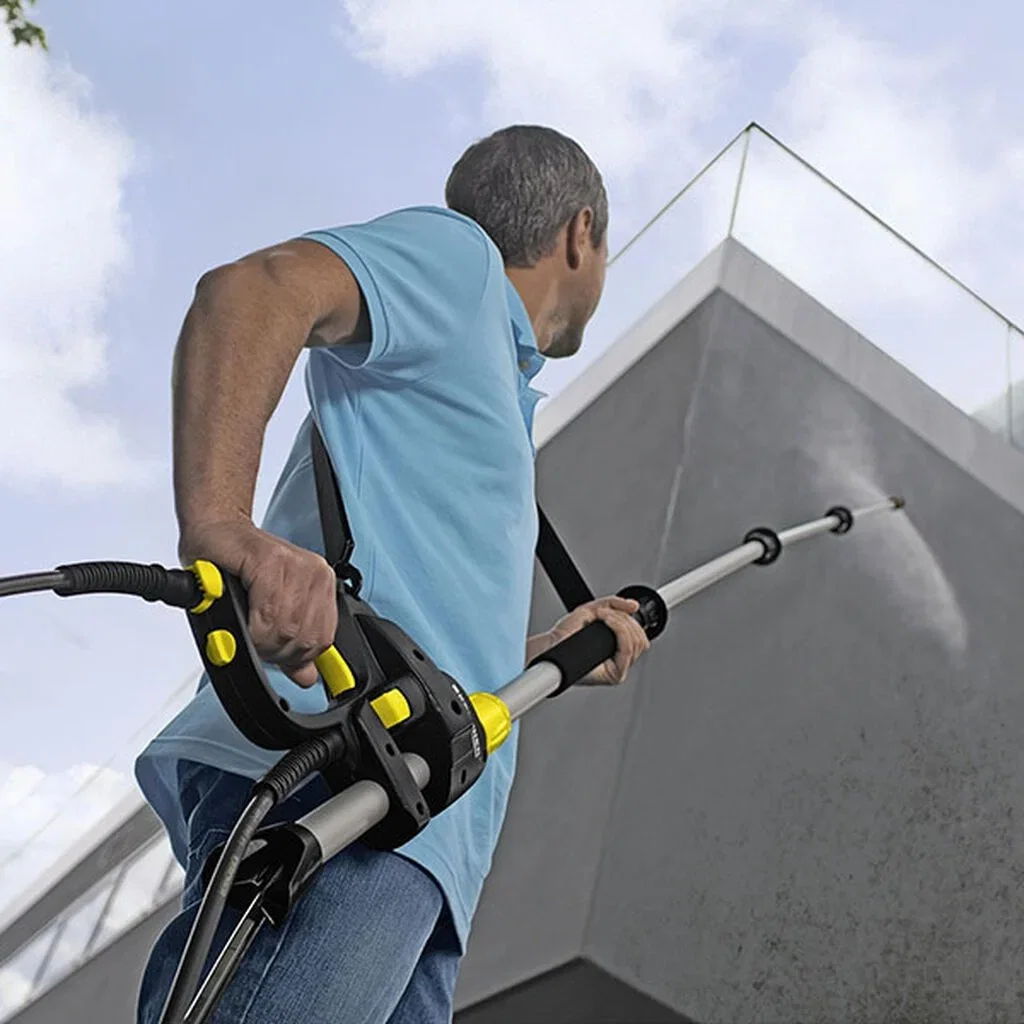
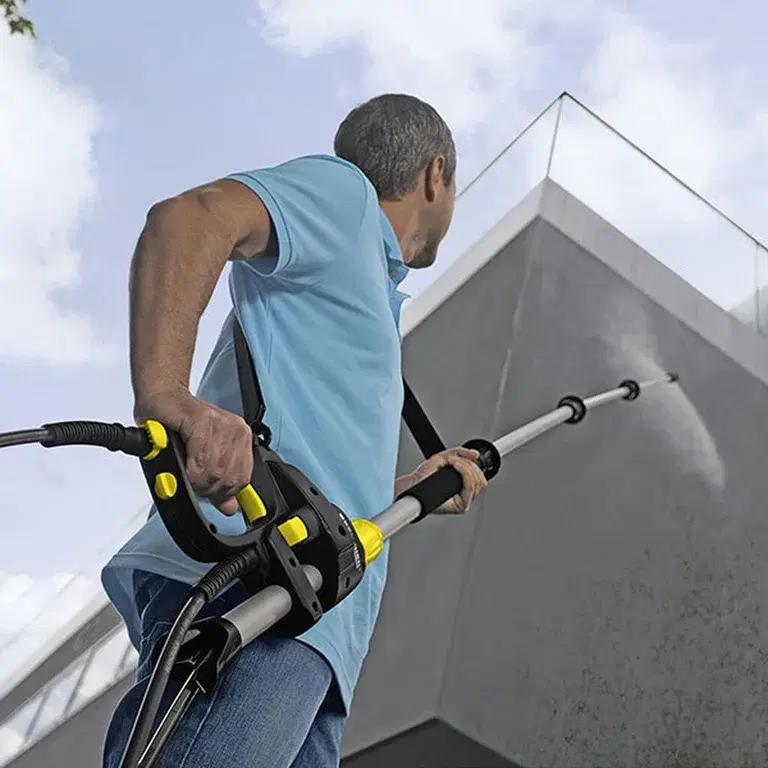
To achieve an even and streak-free clean, you must work systematically. Spray in long, overlapping strokes and maintain a steady movement. On vertical surfaces (like house walls), you should always spray from top to bottom to allow dirty water to run away from areas that have already been cleaned, which prevents unsightly streaking.
It is also important to consider the environment around you. Pay special attention to garden plants, as strong cleaning agents can harm them. Before you start, you should cover vulnerable shrubs and flowerbeds or ensure that the wash water is diverted away from them.
Here are the accessories that make the heavy job easier
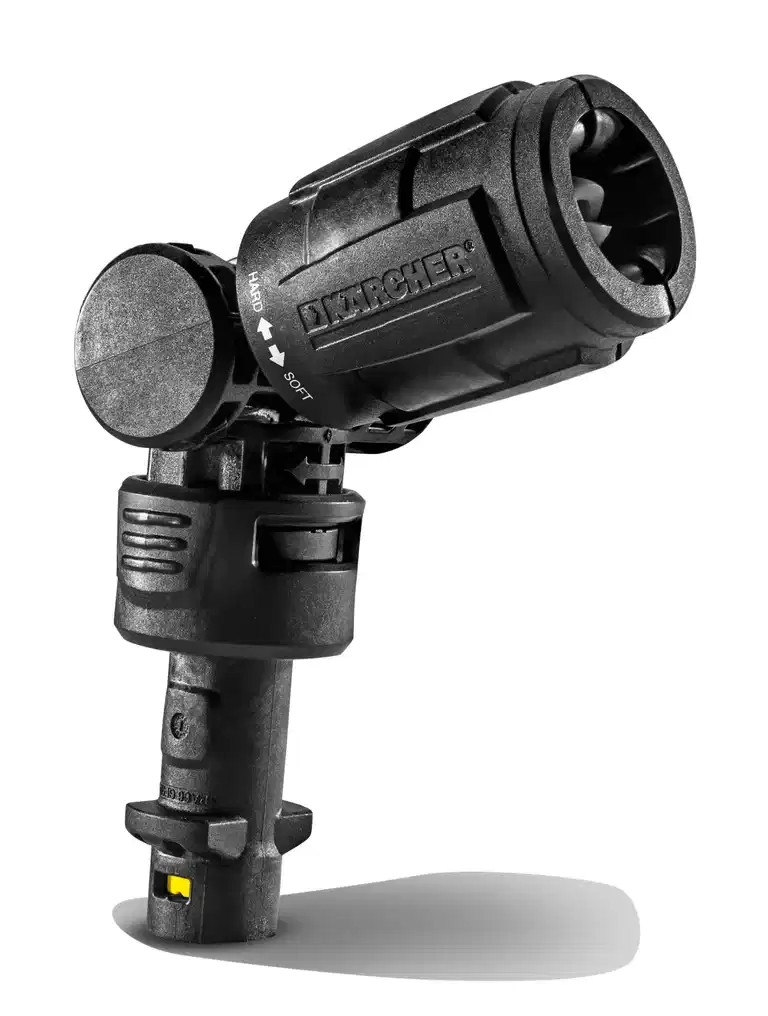
Take care of your body – and the equipment
Pressure washing is a physical job that requires you to be moving and holding the lance steady. Wear comfortable and waterproof footwear, and remember safety goggles to protect your eyes from spray and particles. Feel free to take short breaks along the way to avoid unnecessary strain on your arms and back.
After the job is done, don't forget the equipment. Make sure you completely drain the washer of water before winter storage to avoid frost damage. With proper maintenance, your pressure washer will be ready for battle for many seasons to come.
With these simple steps for planning, equipment, and technique, you have everything you need to succeed with pressure washing. It's not just about removing dirt, but about giving your outdoor space a well-deserved lift—a feeling of freshness and renewal.
Read more:

You are here: